
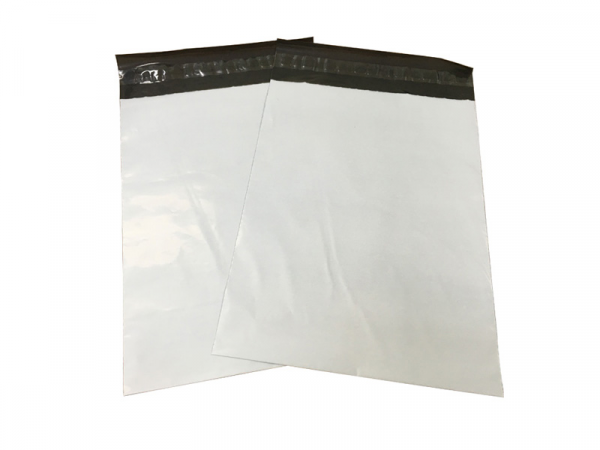
E-commerce shipping has a simple problem: the package must protect the order, move through sorting systems, and still look clean when it reaches the customer. White poly mailers solve that problem for many lightweight goods because they combine a professional surface, water resistance, low storage volume, and easy customization in one shipping format. For B2B buyers, the real value is not only the white color. The value comes from matching the mailer structure, opacity, adhesive seal, size range, and print plan to the way orders actually move.
Why do white poly mailers work well for e-commerce shipping?
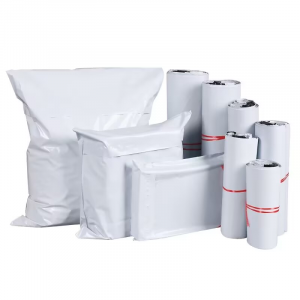
White poly mailers work well because they give soft and non-fragile products a clean, protective, and space-saving shipping format.
For apparel, footwear accessories, daily necessities, documents, and small retail goods, a rigid box often adds extra cost and empty space. A mailer adjusts more closely to the product shape, so sellers can reduce packing bulk without leaving the shipment visually unfinished.
Use Case | Why White Poly Mailers Fit |
Apparel and soft goods | Flexible packaging reduces unused space around shirts, pants, and jackets. |
Daily necessities | A clean exterior supports general retail presentation without overdesign. |
Courier documents | A white background improves label and document visibility. |
Wholesale distribution | Flat storage helps importers and traders hold larger stock with less warehouse space. |
What benefits do white poly mailers bring to packaging cost and logistics?
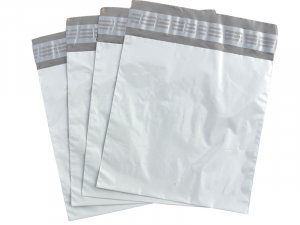
White poly mailers help reduce logistics pressure because they are lightweight, compact, and easier to store than many box-based shipping formats.
Packaging cost is not only the unit price of the bag. Buyers should also count warehouse storage, picking speed, filling time, label readability, return handling, and freight weight. A low-priced package can still create hidden cost if it slows packing or fails during delivery.
Industry demand supports this shift toward efficient mailer formats. Fortune Business Insights values the global mailer packaging market at USD 37.22 billion in 2025 and projects it to reach USD 64.87 billion by 2034. MarketsandMarkets also projects the e-commerce packaging market to grow from USD 79.83 billion in 2025 to USD 114.33 billion by 2030.[1]
That growth does not mean every product should use a mailer. However, it shows why importers, wholesalers, and fulfillment teams are paying closer attention to mailer performance instead of treating shipping bags as a small commodity item.
- Compare the filled package size against box dimensions before switching formats.
- Check whether the mailer can pass internal drop, pull, and moisture exposure tests.
- Calculate storage volume per 10,000 pieces, not only the bag price.
- Confirm whether the seal strength fits manual packing, automated packing, or courier pickup workflows.
How do white poly mailers support branding without heavy printing?
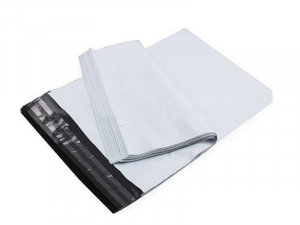
White poly mailers support branding by creating a neat blank surface that can stay minimal or carry custom design elements when needed.
Not every brand needs full-surface printing. Some e-commerce sellers prefer a clean white mailer with a printed logo, return message, QR code, or simple brand color stripe. This approach keeps the package professional while avoiding visual clutter.
For wholesalers and traders, white stock is also easier to standardize across multiple clients. One base color can serve different downstream buyers, especially when buyers need private label stickers or small logo variations.
When buyers need a stronger branded experience, custom poly mailers can turn the shipping bag into a low-friction recognition tool. The key is to design for shipping reality, not only for a screen mockup.
Design Decision | Practical Recommendation |
Logo placement | Keep the logo away from the shipping label zone. |
Color contrast | Use dark ink on white surfaces for cleaner scanning and recognition. |
Message length | Limit copy to one short phrase or service promise. |
Return information | Use a clear return note only when it supports the buyer journey. |
What should B2B buyers check before ordering white poly mailers?
B2B buyers should check material, opacity, sealing method, thickness, printing capability, MOQ, lead time, and product fit before placing bulk orders.
White mailers look simple, but small specification changes affect performance. A thicker film may feel more secure, yet it can increase cost and packing weight. A thinner film may reduce material use, but it needs enough tear resistance for the product category and delivery route.
Buyers should prepare product dimensions, packed weight, sealing requirements, artwork files, target order quantity, and destination market rules before asking for a quote. As a result, the supplier can recommend a workable structure instead of guessing from a general bag size.
- Product category: soft goods, accessories, documents, or mixed daily goods.
- Size plan: flat product size plus allowance for filling and sealing.
- Film requirement: opacity, thickness, tear resistance, and waterproof surface.
- Branding plan: plain white, logo printing, or full custom artwork.
- Commercial plan: MOQ, sample needs, lead time, and repeat order schedule.
How does WH Packing supply white poly mailers for bulk and custom orders?
At WH Packing, we are a 15-year source factory specializing in B2B custom poly mailers. We operate 18 film blowing machines, 9 printing machines, 39 bag making lines, 5 auto lines, and a monthly capacity of 100 million bags. These details matter for importers and wholesalers because stable repeat supply is often as important as the first order sample.
Our standard white plain poly mailers are manufactured using 100% virgin polyethylene and equipped with a permanent self-adhesive seal, three-layer extrusion technology, gravure printing up to 8 colors, and use in express delivery. Our minimum order quantity (MOQ) depends on the bag dimensions, with 10,000 pieces per design serving as our typical bulk order reference.
You can explore our custom poly mailers category and review our white plain poly mailers to define your exact specifications for an inquiry.
WH Packing Detail | Officially Stated Information |
Company positioning | 15-year source factory for B2B custom poly mailers. |
Production capacity | Monthly capacity of 100 million bags listed on the homepage. |
White mailer structure | Three-layer co-extruded film and virgin raw materials. |
Product example | 100% virgin polyethylene, self-adhesive permanent glue, up to 8-color gravure printing. |
Typical lead time reference | 7-10 days for plain white packaging bags; 15-18 days for printed packaging bags. |
Conclusion: When are white poly mailers the right shipping choice?
White poly mailers are the right choice when buyers need lightweight protection, clean presentation, readable labels, and flexible customization for soft or non-fragile goods.
They are especially practical for apparel and footwear sellers, daily goods brands, packaging wholesalers, importers, traders, and courier-related packaging programs. However, the buying decision should stay practical. A good white mailer must fit the product, protect privacy, seal securely, and match the company’s packing speed.
For brands that want a clean look first and heavier branding later, white mailers also offer a flexible path. Buyers can start with plain white packaging, then add logo printing, messages, or larger artwork as order volume and brand requirements grow.
- Choose white poly mailers for soft, non-fragile, and label-heavy shipments.
- Use custom printing only when the artwork improves recognition or customer clarity.
- Confirm specifications with real packed samples before scaling the purchase.
- Keep the final package simple, secure, and easy for couriers to scan.
References
[1]MarketsandMarkets e-commerce packaging market report: https://www.marketsandmarkets.com/Market-Reports/e-commerce-packaging-market-103363504.html