
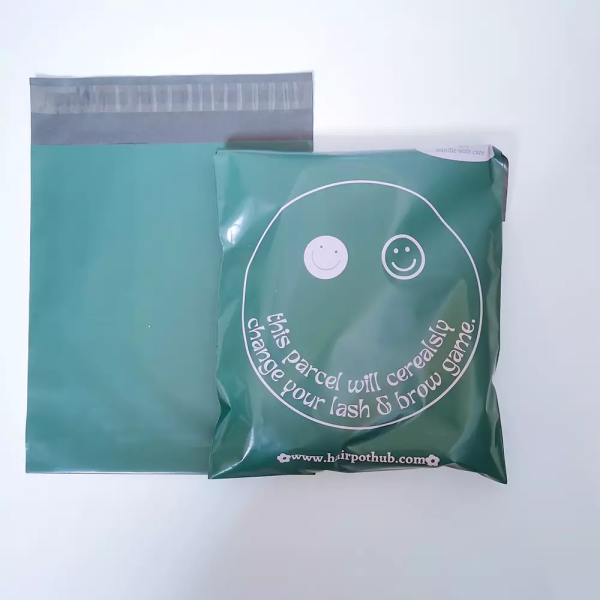
When a customer receives an order, the first branded object they touch is the shipping package. That makes custom printed poly mailers a practical branding tool for apparel sellers, footwear brands, daily goods retailers, importers, wholesalers, and courier companies. The goal is to make every parcel easier to recognize, trust, and remember.
Why Do Custom Printed Poly Mailers Matter for Brand Recognition?
Custom printed poly mailers matter because they turn a delivery bag into a repeated brand impression. A plain mailer protects the item, but a printed mailer also carries the brand name, color system, and message through the delivery journey.
This matters as parcel demand grows. Fortune Business Insights projects the global mailer packaging market to grow from USD 39.39 billion in 2026 to USD 64.87 billion by 2034. More shipments create more brand touchpoints, but also more competition at the doorstep.
For e-commerce brands, a consistent printed design helps customers connect the package with the store before they open it.
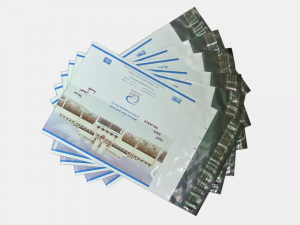 How Does Shipping Packaging Become a Repeated Brand Touchpoint?
Shipping packaging becomes a brand touchpoint because it appears during fulfillment, courier handling, delivery, unboxing, and sometimes social sharing. Each stage gives the same logo, color, and message another chance to be seen.
 What Design Elements Make Custom Poly Mailers Easier to Remember?
 What Design Elements Make Custom Poly Mailers Easier to Remember?
The most memorable custom poly mailers usually combine clear logo placement, readable contrast, controlled color use, and a simple message. These elements work because the package may be viewed quickly or from a distance.
A good design should answer three questions: Who sent this package? What kind of brand is this? Is the parcel easy for the carrier to process? If artwork confuses labels or barcodes, the design has gone too far.
Design Element | Why It Matters | Practical Tip |
Logo | Builds instant recognition | Keep it on the largest flat surface |
Brand color | Links package to website and ads | Use strong contrast |
Short message | Adds personality | Keep wording to one short line |
Label area | Protects delivery accuracy | Leave a clean space for labels |
For apparel and footwear brands, a full-surface pattern can strengthen unboxing. For daily necessities, a cleaner design may feel more practical. For courier companies, color coding may separate service levels or account types.
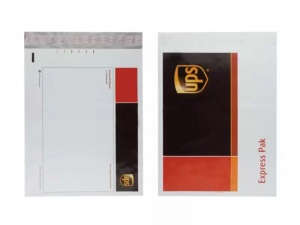
How Should B2B Buyers Match Poly Mailers to Real Shipping Scenarios?
B2B buyers should match mailers to product category, route, volume, and customer experience goal. A design for T-shirts may not fit shoes, cosmetics, or cross-border parcels.
Apparel sellers usually prioritize weight and flexibility. Footwear sellers need puncture resistance and correct sizing. Daily goods sellers often need a clean appearance while keeping unit cost realistic.
Before ordering, buyers should prepare:
- Product type and average packed size
- Target mailer size and thickness
- Logo file and color requirements
- Quantity by design or size
- Label placement and sealing preference
- Destination markets and packing method
This step prevents the common mistake of choosing artwork before confirming logistics requirements. When buyers start with shipping reality, the final design can support both branding and operations.
What Should Importers, Wholesalers, and Courier Companies Compare Before Ordering?
Importers, wholesalers, and courier companies should compare material options, print color capacity, minimum order quantity, lead time, and production capacity. These factors decide whether a supplier can support repeat orders, not just one trial order.
How Can WH Packing Support Custom Printed Poly Mailers for Bulk Buyers?
We support bulk buyers with custom printed poly mailers tailored specifically for demanding e-commerce and logistics environments. Our product line is designed to enhance your brand identity and ensure product security by utilizing high-strength, waterproof multi-layer materials and advanced gravure printing technology.
We provide a comprehensive range of shipping packaging options, including custom printed, eco-friendly, plain white, colored, transparent, and die-cut handle poly mailers. For our standard 3-layer co-extruded LDPE mailers (featuring a clean white exterior with an opaque gray or black interior lining), we offer flexible material options including LLDPE, LDPE, and HDPE to match your specific durability requirements.
A representative printed poly mailer product page lists 3-layer co-extruded LDPE material, with white outside and gray or black inside. It describes use cases such as apparel, shoes, books, cosmetics, and supplements, with material options including LLDPE, LDPE, and HDPE.
For ordering, the same page lists custom size, color, and printed options; matte or glossy finishing; thickness of 0.05 mm to 0.07 mm or buyer option; printing up to 10 colors; MOQ of 10,000 pieces; and lead time of 25 working days.
WH Packing Information | Official Detail |
Product category | Printed poly mailers |
Main application | E-commerce and logistics |
Material example | 3-layer co-extruded LDPE |
Printing | Up to 10 colors on listed product page |
MOQ | 10,000 pieces |
Quote requirements | Quantity, specs, logo sketch or photo, packaging, and special requirements |
You can explore our full packaging catalog on our homepage to review specialized options for your brand. To get an accurate quote from our team, simply send us your required bag dimensions, artwork design, order quantity, and specific packaging preferences in one message.
Conclusion: How Can Brands Turn Every Shipment into a Recognition Opportunity?
Brands can improve recognition by treating the mailer as part of the customer journey, not just a shipping cost. The package should protect the item, identify the sender, support delivery accuracy, and repeat the brand’s visual language.
The best custom printed poly mailers are not always the most complex designs. They are the designs that match the product, route, customer, and buying model. For B2B buyers, that means starting with protection and order requirements, then building the brand design around those facts.