
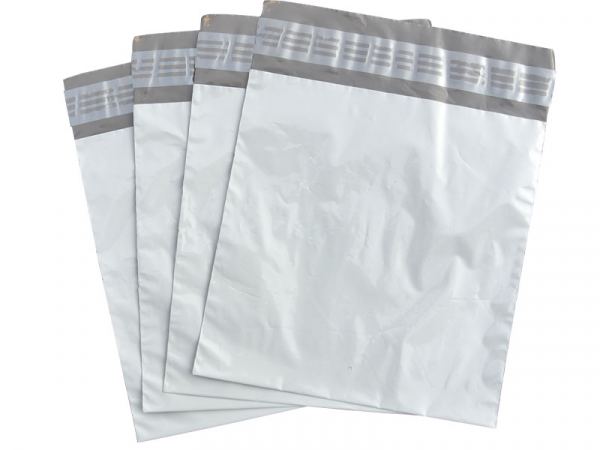
White poly mailers look simple, but the wrong buying decision can create label issues, weak seals, product damage, and repeat orders. For B2B buyers, price matters, yet the real goal is to match size, film strength, opacity, sealing, and branding needs to the shipment.
This guide explains the common mistakes importers, wholesalers, e-commerce sellers, and courier companies make when sourcing white poly mailers. It also gives a practical checklist for choosing custom poly mailers with fewer quality surprises.
Why Do Buyers Treat White Poly Mailers as a One-Size-Fits-All Product?
The first mistake is assuming every white mailer can handle every e-commerce order. White poly mailers suit flexible, non-fragile products such as apparel, soft accessories, and lightweight daily goods, but rigid or sharp items may need extra inner protection or a box.
This matters because the package is not only a bag. It must survive warehouse picking, sorting, loading, courier handoff, and the customer’s first impression. If the mailer is chosen only from a product photo, the buyer may miss the real stress points.
Start with the packed item, not the flat item. Folded height, inner bags, tags, air space, and return documents all change the final fit. A sample test with real SKUs is the simplest way to prevent bulk-order mistakes.
Product type | Common mistake | Safer buying decision |
Apparel | Mailer too tight after folding | Add allowance for height and tags |
Footwear accessories | Sharp edges stress the film | Use inner wrap or stronger film |
Daily goods | Mixed SKUs use one bag size | Create a size matrix by SKU group |
What Happens When Size, Thickness, and Opacity Are Not Verified?
Unverified specifications create hidden costs after delivery. A mailer that is too small stresses the seal, a mailer that is too large wastes material, and a thin film can puncture during handling.
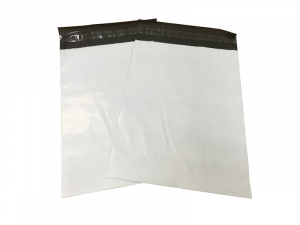
Opacity is another common blind spot. White packaging should block the product from view, especially for apparel and daily necessities, while still keeping the outside clean enough for labels and barcodes. If the film is too translucent, the parcel can look unfinished and less secure.
We manufacture our white poly mailers using a three-layer co-extruded film blowing process and virgin raw materials to ensure durability, tear resistance, and a waterproof surface. Buyers should still request samples because real packed tests reveal seal strength, surface feel, and label adhesion more clearly than a specification sheet alone.
Specification checks before approval:
- Measure the packed product, not only the product itself.
- Test sealing after the mailer is fully loaded.
- Check opacity under warehouse and daylight conditions.
- Apply a shipping label and scan the barcode before bulk approval.
Why Do Label Space and Branding Plans Get Overlooked?
Label space gets overlooked because white poly mailers appear easy to print and easy to label. In practice, logos, return labels, customs labels, barcodes, and courier routing labels all need clear space on the same surface.
USPS guidance says package labels should be placed on the same side, parallel to the longest side, and should not be bent, folded, or overlapped. This makes front-side planning important, especially for small mailers and designs with large logo blocks.
Branding also needs early planning. If artwork is approved after size selection, the design may leave no clean zone for shipping operations. The result is a good-looking mailer that slows the packing line or creates scanning risk.
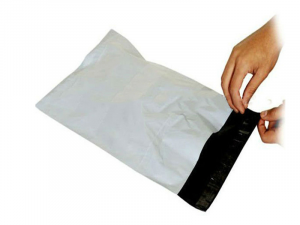
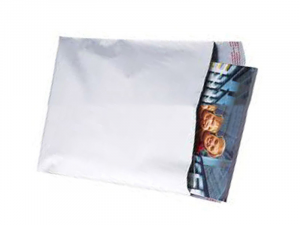
For buyers comparing plain and branded options, we provide white plain poly mailers made of 100% virgin polyethylene, featuring a permanent self-adhesive seal, three-layer extrusion technology, and up to 8-color gravure printing. These details help buyers discuss both functional requirements and custom poly mailers for brand programs.
How Should B2B Buyers Check the Supplier Before Ordering?
Supplier checks prevent most bulk purchasing disputes. Before negotiating only on unit price, buyers should verify material, adhesive type, print method, size tolerance, sample process, production capacity, and reorder support.
As a 15-year source factory for B2B custom poly mailers, we manage the entire production process from raw materials to final output. Our facilities include 18 film blowing machines, 9 printing machines, 34 bag making lines, and 5 automated lines, supporting a monthly capacity of 100 million bags.
You can explore our white poly mailers category to view product options and learn more about our custom manufacturing and wholesale supply capabilities.
Supplier detail | Why it matters | Question to ask |
Material | Controls strength and opacity | What film and structure are used? |
Adhesive | Affects seal security | How does the seal perform when loaded? |
Printing | Affects brand consistency | How many colors and what method are available? |
Capacity | Supports repeat orders | Can seasonal volume be supplied consistently? |
How Can Buyers Avoid White Poly Mailer Mistakes Before Bulk Production?
Buyers can avoid most mistakes by turning the purchase into a controlled approval process. The correct order should match the product, parcel route, bag size, film performance, label layout, and branding goal before production starts.
The market context supports this careful approach. Fortune Business Insights projects the global mailer packaging market to grow from USD 39.39 billion in 2026 to USD 64.87 billion by 2034. As demand grows, buyers that standardize specifications early will scale with fewer reorders and fewer quality disputes.
For e-commerce sellers, the main benefit is smoother packing and cleaner delivery presentation. For courier companies, the main benefit is consistent label handling. For importers and traders, the main benefit is a white mailer line that can serve several customer segments without constant redesign.
Final approval sequence:
- Define shipped product types and parcel routes.
- Approve size and thickness from packed samples.
- Reserve label space before artwork approval.
- Verify supplier capacity, material, printing, and samples.
- Record the approved specification for every reorder.