
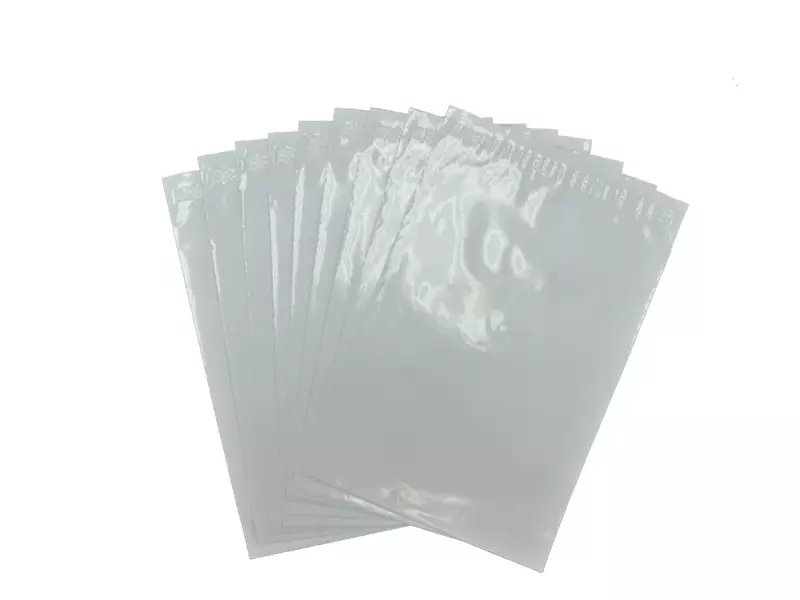
Moisture, rough handling, and repeated sorting can expose shipping packages to risks that are easy to overlook during procurement. Poly mailers wholesale buyers need to consider film structure, seams, closure strength, and shipment type together. Judging a bag by thickness alone does not reflect its full performance. At WH Packing, we work with B2B customers that need shipping packaging suited to e-commerce, express delivery, and logistics operations, where practical protection matters throughout the distribution process.
Understanding Moisture Resistance
Polyethylene provides a useful moisture barrier for many shipping applications. Rain, splashes, and humid storage can affect cartons and paper packaging, while a polyethylene mailer keeps the outer surface less vulnerable to water exposure.
Water resistance still depends on the finished bag. Film quality, side seams, and the opening all contribute to how well the package handles moisture during transportation.
Shipment conditions also deserve attention. A parcel moving through covered warehouses faces different exposure from one handled outdoors or transferred between vehicles in wet weather.
Looking at Film Structure
Three-layer extrusion is widely used in polyethylene film production because multiple layers can be designed as part of one film structure. The finished material needs to remain flexible while providing suitable resistance to tearing and handling stress.
Thickness is another specification worth reviewing. A thicker film may provide more material, but thickness alone does not describe the whole performance of a shipping bag. Film formulation and manufacturing quality also affect how the package behaves.
For buyers comparing poly mailers wholesale, the better question is whether the selected specification fits the contents. Lightweight apparel does not necessarily require the same material specification as a dense item with hard edges.
Checking the Closure and Seams
The opening is an important part of package security. A permanent adhesive closure is designed to create a sealed flap that cannot normally be opened without damaging the bag.
Seams deserve equal attention because they receive stress when the package is filled or handled. Weak edges can become failure points even if the main film performs well.
Our WH Packing White Poly Mailers use 100% virgin polyethylene, three-layer extrusion technology, a permanent adhesive seal, and a customized thickness range of 30–150 microns (1.2–6.0 mil). The product page also specifies water and tear resistance and reinforced side seams, with a normal MOQ of 10,000 pieces per size.
Matching Packaging to Contents
Not every shipment needs the same type of protection. Clothing, soft goods, documents, and other non-fragile items can often use flexible mailing packaging because the contents do not place concentrated pressure on the film.
Irregular shapes require more attention. Corners, edges, and protruding parts can create localized stress, particularly when the parcel is tightly packed.
Package size matters as well. A bag that is too small can place unnecessary tension on the seams and closure, while excessive empty space can allow the contents to move during transportation.
Considering Handling Conditions
Packages may pass through several stages before reaching the recipient. Sorting equipment, manual handling, stacking, vehicle loading, and unloading can all place different forms of stress on the outer package.
A secure design should fit the actual distribution process. Businesses handling high parcel volumes may benefit from consistent bag dimensions and specifications because warehouse staff can work with a predictable packaging format.
Poly mailers wholesale programs should also consider practical features such as handles, perforated lines, double adhesive tape, invoice pouches, and other options. These features can be selected according to packing and delivery workflows rather than added simply for appearance.
Evaluating Supplier Capability
Supplier evaluation goes beyond the sample bag. Buyers should review production equipment, material control, printing capability, customization options, quality systems, minimum order quantities, and production schedules before establishing a long-term supply arrangement.
Our factory operates film blowing, printing, and bag-making equipment, with the official company page listing 18 film blowing machines, 9 printing machines, and 39 bag-making lines. The same page reports monthly production capacity of up to 100 million bags.
A useful purchasing decision connects the packaging specification with the supplier’s manufacturing process. At WH Packing, we support customized poly mailers for express delivery, e-commerce, and logistics applications, giving B2B buyers room to define dimensions, thickness, printing, closure, and additional functional features around their shipping needs.
Making the Final Assessment
Water resistance and security come from several details working together. Film structure protects the main surface, seams support the edges, and the closure controls access to the contents. Shipment type then determines how much protection the package needs.
A practical evaluation should also include size, thickness, contents, handling conditions, closure type, and procurement volume. Looking at these factors together gives purchasing teams a clearer basis for comparing suppliers and specifications.
With poly mailers wholesale, the most useful specification is not necessarily the heaviest or most feature-rich option. At WH Packing, we approach packaging development around the actual shipping application, combining customizable specifications with in-house manufacturing capabilities to support repeat B2B purchasing requirements.