
Packaging manufacturers serving international markets need to consider more than size, appearance, and price. Materials, production control, labeling, recycling claims, and transport performance can all affect whether packaging is suitable for a target market. For a poly mailer bag manufacturer, understanding these requirements early can also reduce unnecessary changes after samples or production have already started.
At WH Packing, we manufacture courier bags for e-commerce companies, express delivery businesses, packaging importers, wholesalers, and other B2B customers. Our work with different markets has shown that international packaging requirements are not defined by one universal rule. Manufacturers need to identify the destination, product use, material type, and customer specifications before production begins.
International Standards Start With the Target Market
There is no single packaging standard that covers every country and every application. A courier bag shipped to the United States may face different regulatory or customer requirements from one supplied to the European Union, the United Kingdom, Australia, or Japan. Manufacturers therefore need to confirm the destination market before deciding which requirements apply.
International standards can provide a useful framework. For example, the ISO 18601–18606 series addresses packaging and environmental considerations. ISO 18601 provides general requirements for using the related standards, while ISO 18604 covers requirements for packaging recoverable through material recycling.
Standards should also be separated from legal requirements. An ISO standard, a customer specification, and a national regulation do not necessarily have the same legal status. Buyers and manufacturers should check applicable rules for each destination rather than assuming that one certificate or test report covers every market.
Material Selection Needs Clear Specifications
Material is one of the first items to confirm for courier packaging. Buyers should specify the required material structure, thickness, dimensions, recycled content, and other relevant properties. These details affect bag performance and also influence environmental claims made on the finished packaging.
Recycled materials require particular attention. Pre-consumer recycled material comes from material diverted from the waste stream during manufacturing. Post-consumer recycled material has already been used by consumers or businesses before being collected and processed for another production cycle. Buyers should distinguish between these sources when specifying recycled packaging.
For projects requiring recycled materials, traceability can become part of supplier evaluation. GRS-related requirements may be relevant when a customer needs recycled content and associated chain-of-custody controls. Manufacturers should confirm the requested material and documentation before quoting or preparing production samples.
Environmental Claims Must Match the Material
Terms such as “recyclable,” “recycled,” “biodegradable,” and “compostable” describe different characteristics. They should not be used interchangeably. A bag containing recycled material, for example, is not automatically biodegradable. Clear terminology helps importers and brands avoid creating packaging information that does not match the actual material.
Compostable plastic packaging may also need to meet specific standards in its destination market. ASTM D6400-26, for example, covers requirements for labeling plastics designed for aerobic composting in municipal or industrial facilities. It does not mean that every product described simply as biodegradable automatically meets this standard.
Our courier bag options can include pre-consumer recycled material, post-consumer recycled material, and fully biodegradable material according to project requirements. Material selection should therefore begin with the buyer’s intended environmental claim, target market, and packaging use rather than choosing a material only from its name.
Quality Control Goes Beyond Visual Inspection
International buyers also need consistent specifications across production batches. A courier bag may look acceptable but still create problems if its dimensions, sealing, printing, or adhesive closure differ significantly from the approved sample. Quality control should therefore cover measurable production requirements instead of relying only on appearance.
For a poly mailer bag manufacturer, common control points can include bag dimensions, film condition, sealing quality, printing position, print appearance, closure performance, and finished-product condition. The exact inspection items should follow the product specification agreed with the customer.
Sampling is useful before bulk production because it gives both parties a physical reference. Buyers can check dimensions, material feel, printing, closure structure, and other requested details. Once specifications are confirmed, the approved requirements can be used as a reference during production and inspection.
Packaging Design Should Consider Distribution Conditions
Courier packaging passes through sorting, loading, transportation, and final delivery. A specification that works for lightweight clothing may not be appropriate for another type of product. Manufacturers should therefore understand what will be packed inside the bag and how it will move through the distribution process.
Bag dimensions also matter. Oversized packaging uses more material and can leave unnecessary space around the product. Packaging that is too small can place extra stress on seals or make packing difficult. Buyers should provide product dimensions and packing requirements when developing a customized size.
Printing is another practical consideration. Logos, instructions, recycling information, and handling marks need sufficient space and readable positioning. Before production, artwork should be checked against the actual bag dimensions and printing area rather than reviewed only as a separate digital file.
Production Capacity Matters for Large Orders
Compliance and quality specifications need to remain practical during volume production. Large e-commerce or express-delivery orders can involve substantial quantities, so buyers should consider whether the factory has enough production capacity to follow the agreed schedule without changing confirmed product requirements.
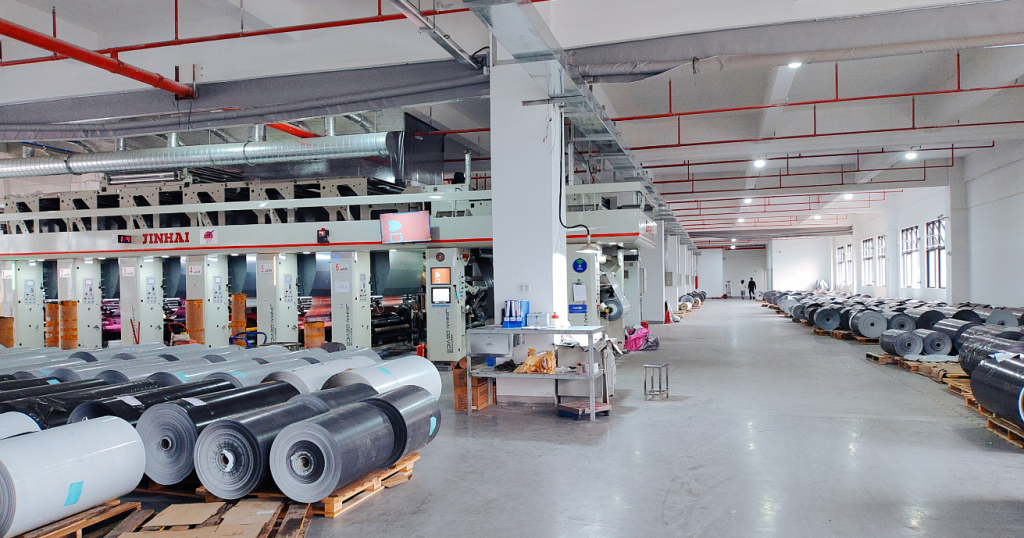
At WH Packing, our factory covers 27,000 square meters and has a monthly production capacity of 100 million bags. Scale purchasing and specialized production help us manage costs, while our quality management and internal control procedures focus on production consistency.
A Practical Approach to International Packaging Requirements
Manufacturers working internationally should treat packaging standards as a combination of market rules, customer specifications, material requirements, environmental claims, and production controls. Checking these points before sampling is more practical than trying to correct specifications after bulk production has started.
For courier bags, buyers can begin with five questions: where will the packaging be sold, what will it contain, which material is required, what environmental claim will be used, and which quality specifications must be checked? Clear answers give manufacturers a workable basis for material selection, sampling, production, inspection, and international delivery.