
E-commerce brands, logistics giants, and packaging distributors face critical choices as they scale. Among these decisions, selecting the right protective packaging and managing procurement costs are paramount. Many sourcing managers struggle to understand why manufacturers enforce minimum order quantities (MOQs) for tailored logistics bags. To establish a reliable, high-volume supply chain, partnering with a professional manufacturer like WH Packing allows brands to leverage source-factory pricing while navigating the industrial realities of customization. Understanding the mechanics of factory-level MOQs helps B2B buyers optimize their ordering cycles, reduce unit costs, and secure high-performance packaging that represents their brand identity perfectly in transit.
Why Do Manufacturers Enforce MOQs on Industrial Packaging?
For wholesale buyers, MOQs can seem like an arbitrary barrier, but in professional polymer manufacturing, these thresholds directly relate to production efficiency. The manufacturing process of poly mailers begins with raw material compounding and plastic film extrusion. During this initial stage, high-output extruders require a substantial baseline quantity of polymer resin to stabilize temperature, pressure, and film thickness.
If a factory runs small batches, the raw material wasted during calibration disproportionately drives up the unit cost. Furthermore, custom printing introduces additional variables. Photopolymer plate creation, color mixing, and aligning printing rollers require extensive machine downtime. For direct-source factories serving global logistics and retail enterprises, keeping production lines running seamlessly is the only way to maintain the economies of scale that keep wholesale prices highly competitive.
Key Factors Influencing MOQs for Custom Apparel Shipping Bags
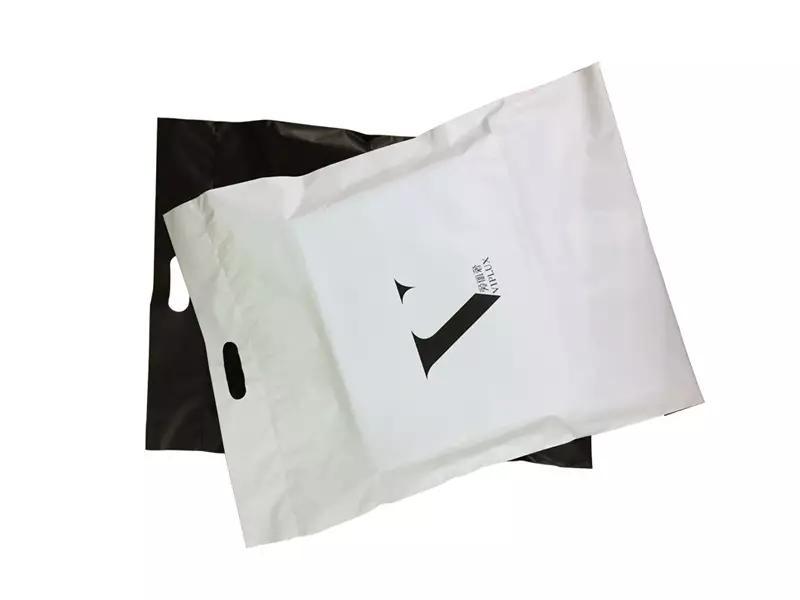
When procurement teams search for tailored options, the specific design requirements will dictate the final MOQ. A fundamental element in this equation when sourcing wholesale custom apparel shipping bags is the level of printing and physical structural customization requested.
Plain, stock-sized white or colored mailers usually feature much lower thresholds because the raw film parameters are standardized and can be run continuously. In contrast, fully customized printed poly mailers require dedicated production windows. The thickness of the bag (measured in microns or mils) also plays a key role. Thicker co-extruded films require more raw material per bag, meaning the MOQ in terms of units might adjust to align with the minimum tonnage of the extruded plastic batch. Size is another determining factor; larger mailers consume more material surface area per unit, meaning the physical unit count required to meet the raw material extrusion minimum will be lower than that of small accessory pouches.
Balancing Material Choices and Design Features
Modern B2B clients increasingly balance cost-efficiency with corporate sustainability mandates. Modern manufacturing allows for diverse material compositions, such as Global Recycled Standard (GRS) certified materials. These options include pre-consumer recycled materials, post-consumer recycled materials, and fully biodegradable films, which are particularly favored by markets in Australia and Western Europe.
Integrating these eco-friendly resins can sometimes affect the MOQ, as specialized compound formulas require dedicated extrusion cleaning runs to avoid cross-contamination with standard virgin LDPE. Beyond the base material, functional structural modifications also shift production dynamics. For instance, selecting highly functional designs like poly mailers with handles often impacts the automated folding and inline die-cutting adjustments on the bag-making machinery. Adding handles, dual adhesive tear-strips for returns, or bottom gussets changes the tooling setup. These structural enhancements require precise mechanical alignment, which justifies why specialized configurations carry slightly higher manufacturing thresholds than simple, flat rectangular envelopes.
Evaluating Factory Capacity and Quality Management
Working with a source factory that possesses comprehensive, end-to-end production capabilities can significantly ease MOQ pressures while guaranteeing stable quality. A large-scale manufacturing facility spanning 27,000 square meters, equipped with high-speed co-extrusion, printing, and cutting lines, has the unique operational flexibility to process high-volume orders efficiently. With a robust monthly production capacity reaching 100 million units, such facilities can easily absorb large-scale runs for international carriers like FedEx and UPS while maintaining stringent quality control standards.
B2B buyers should look for manufacturers operating under established ISO certification frameworks. Internal quality control protocols ensure that every production batch meets strict tear-resistance, tensile strength, and waterproof seals standards. When a factory controls the entire supply chain—from raw polymer procurement to final bag conversion—they can offer highly personalized OEM/ODM solutions. This complete process control also translates to realistic delivery guarantees, preventing supply chain disruptions.
Optimizing Your Procurement Strategy for Scale
Navigating MOQ barriers requires a strategic approach to inventory management and supplier collaboration. For importers, distributors, and massive e-commerce operations, the most cost-effective path is to consolidate ordering cycles. Instead of placing frequent, small orders that fall below factory thresholds, scheduling quarterly or bi-annual production runs allows you to secure the lowest possible price per unit.
When choosing a manufacturing partner, look for a supplier that provides transparent pre-sales consultation and structured design support. Proactive communication regarding your annual volume projections can often lead to flexible MOQ arrangements, where the factory schedules your runs alongside matching standard production cycles. By aligning your design specifications with existing raw material profiles and optimizing your order sizes to match chemical extrusion batches, your business can maximize packaging performance, elevate brand presence, and keep logistics costs exceptionally low.