
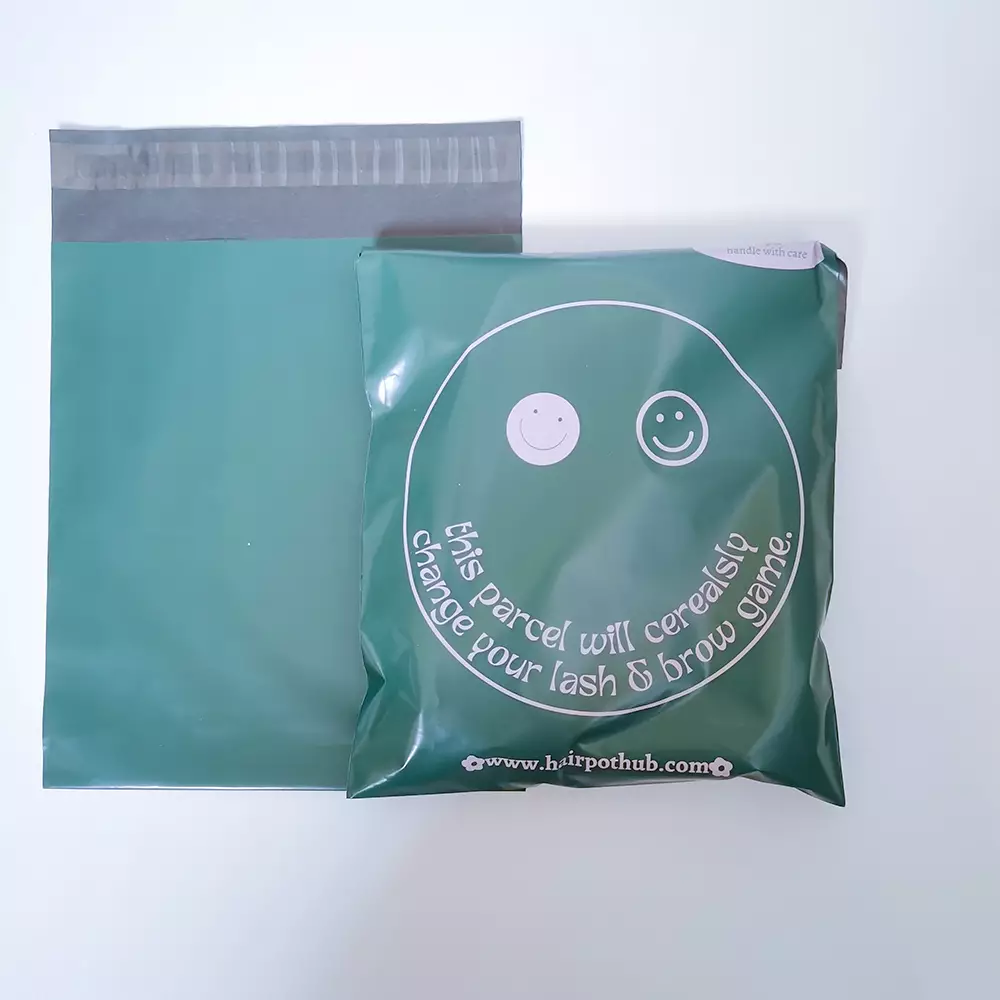
Shipping thousands of orders each week means we cannot afford bag failures. Neither can you. When you invest in custom printed poly mailers, you need confidence that every bag will survive the journey from your warehouse to your customer’s doorstep. Over the years, we have developed simple but rigorous testing methods to evaluate printed shipping bags before they ever touch a fulfillment line. Here is how we do it—and how you can too.
 The puncture and tear test
The most common failure point for printed shipping bags is puncture from sharp corners—think shoe boxes, book edges, or supplement bottles. To simulate this, we take a standard custom printed poly mailers sample and press a dull pointed object (like a pen cap) against the material while gradually increasing force. For e-commerce goods, a quality bag should resist puncture until at least 5–8 kg of pressure. We also perform a tear propagation test: once we make a small cut at the bag’s edge, we try to rip it open. Quality 3-layer co-extruded LDPE—like the material we use for our Wholesale Poly Mailer Happy Smile series—will stop tearing almost immediately, whereas poor-grade bags rip straight across.
The seam and seal integrity test
Your custom printed poly mailers are only as strong as their seals. For self-sealing shipping bags, we test both the adhesive strip and the side gusset seals. One method: fill the bag with 3–5 kg of sand or paper, seal it, and then drop it from waist height (about 1 meter) onto a concrete floor. Repeat ten times. Then, we shake the bag vigorously for 30 seconds. If the bottom seam splits or the adhesive strip lifts, the bag fails. Reliable printed shipping bags should show no separation at all. We also perform a heat-and-humidity test by placing sealed samples in a 40°C environment for 24 hours—this reveals adhesives that weaken under storage conditions.
The burst and load distribution test
For heavier items like jeans or multiple garments, you need custom printed poly mailers that distribute weight evenly. We inflate a bag, seal it, and apply gradual pressure from a flat plate until it bursts. A durable LDPE bag should withstand 15–20 PSI minimum. For real-world simulation, we load the bag to its stated weight limit (e.g., 10 kg), lift it by the top seam, and hold for one minute. Any elongation beyond 5% indicates poor material quality. At WH Packing, our printed shipping bags feature white outer layers for crisp branding and gray/black inner layers for opacity—without sacrificing strength.
Making strength testing part of your process
Testing strength does not require a laboratory. A drop test, a tear test, and a load-hold test using household items will quickly separate strong custom printed poly mailers from weak ones. Always request samples from your supplier before committing to bulk orders. At WH Packing, we manufacture every bag from raw materials to final production, so we test at every stage—and we invite our B2B partners to test alongside us. Whether you ship apparel, books, or cosmetics, trust WH Packing for printed shipping bags that deliver on both brand quality and physical durability. Contact us to request samples or discuss your custom specifications.