
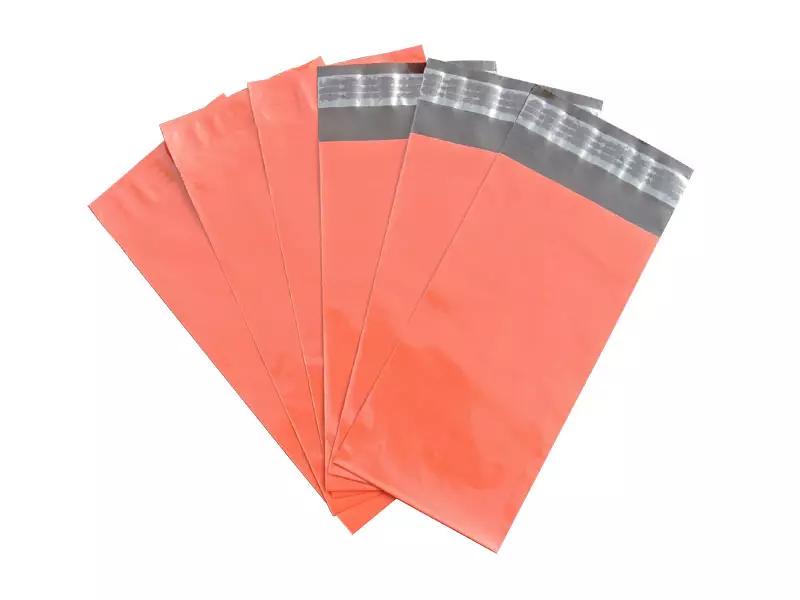
Global e-commerce expansion has forced logistics companies and brand owners to reassess their packaging strategies. Traditional rigid shipping boxes often lead to dimensional weight surcharges and substantial material waste. Moving toward flexible solutions has become a standard approach to lowering distribution costs and reducing environmental footprint. For high-volume B2B importers looking to source these goods directly from a proven manufacturer, WH Packing offers a robust supply of high-performance, customizable shipping bags designed to secure goods while maintaining structural efficiency. Utilizing advanced production technologies, our high-capacity factories can significantly minimize industrial waste throughout the logistics cycle.
The Physics of Material Reduction: Choosing LDPE and Co-extrusion
To reduce waste, one must understand how polymer properties affect packaging thickness. Flexible mailers are traditionally made from Low-Density Polyethylene (LDPE) or co-extruded multi-layer films. Co-extrusion merges several layers of distinct polymer resins into a single film, creating remarkable puncture resistance and high tensile strength even when the overall film is thin.
In practical logistics scenarios, shipping departments often over-package items out of fear of transit damage. For instance, using a 100-micron bag for a lightweight polyester shirt is unnecessary. High-volume operators can reduce material volume by selecting an optimized thickness of 50 to 60 microns. This thickness provides sufficient safety for apparel while cutting down plastic usage by up to 40% compared to thicker, non-optimized alternatives.
Circular Economy Solutions: Integrating GRS Recycled Materials
Implementing a circular loop is another powerful strategy for packaging waste reduction. Modern B2B packaging procurement relies heavily on Global Recycled Standard (GRS) certifications. These eco-friendly formulations generally fall into three distinct categories: pre-consumer recycled materials, post-consumer recycled materials, and fully biodegradable polymers.
Pre-consumer materials utilize clean industrial waste salvaged directly from the manufacturing floor, while post-consumer recycled materials incorporate plastics collected from consumer recycling streams. For brands exporting to regions with strict environmental regulations like Australia, fully biodegradable mailers serve as an excellent option that breaks down naturally. Wholesalers can choose customizable plain poly mailers made from these certified materials to satisfy strict regional compliance standards, helping corporations bolster their environmental credentials before major industry events like the Dusseldorf International Packaging Exhibition.
Innovative Packaging Design with Functional colored poly mailers
Color choice and packaging design play dual roles in aesthetics and operational efficiency. When high-volume brands source custom colored poly mailers, they are not merely upgrading their visual presentation; they are investing in precise, high-performance manufacturing. Modern factories employ advanced corona treatment to temporarily alter the film’s surface energy, ensuring that water-based printing inks bond permanently to the surface.
Using precise Pantone Matching System (PMS) color controls avoids manufacturing errors that lead to batch rejections. When a shipment is rejected due to inaccurate branding colors, the entire batch becomes scrap material, generating massive industrial waste. Choosing an experienced OEM factory that utilizes high-performance gravure printing and exact registration techniques secures perfect consistency. This high level of industrial precision minimizes defects, saving both material resources and financial capital.
Curbing Waste Through Dual Self-Adhesive Sealing Strips
Return logistics represent one of the largest sources of waste in modern e-commerce. Standard shipping bags are often torn open destructively, forcing brands to supply new packaging for returns. Structural customization resolves this via dual self-adhesive sealing strips.
This design features two parallel lines of high-strength adhesive separated by a clean perforation. The packing team seals the first strip to send the order. If the customer needs to return the garment, they can open the bag cleanly along the perforated line, slip the item back inside, and seal the package using the second integrated adhesive strip. This reusable mechanism cuts packaging waste in half for returned items, streamlines warehouse restocking operations, and provides a highly professional, cohesive customer experience.
Scalable Sourcing and Rigorous Quality Systems
Minimizing waste also depends heavily on the reliability of the manufacturing partner. Low-tier factories often produce uneven batches with weak seams, leading to transit burst failures that waste resources. Partnering with a large-scale manufacturer that manages the entire production chain prevents these quality lapses.
Operating a 27,000-square-meter facility with a monthly capacity of 100 million units allows for strict quality control. Fully integrated facilities supervise everything from raw material compounding to automated conversion, ensuring every batch meets rigorous ISO standards. High-volume B2B clients, including major international express carriers like FedEx and UPS, benefit from this steady quality. Consistently strong seams and high puncture resistance mean fewer damaged packages, preventing secondary packaging waste and safeguarding the entire international transit loop.
Maximizing Efficiency in Global Distribution
Operational efficiency in fashion logistics requires a strategic approach to shipping materials. Transitioning to lightweight, highly customized poly bags protects valuable inventory from moisture and rough handling while reducing dimensional weight. Business owners can achieve their waste-reduction targets by implementing thin co-extruded films, choosing GRS-certified recycled materials, and utilizing dual-seal configurations. Working with an established source manufacturer equipped with advanced production machinery ensures that your packaging stands up to international transport stresses. By selecting high-quality materials and functional designs, global distributors can elevate their brand presence, fulfill international compliance mandates, and build a highly sustainable, waste-resilient supply chain that stands the test of time.