
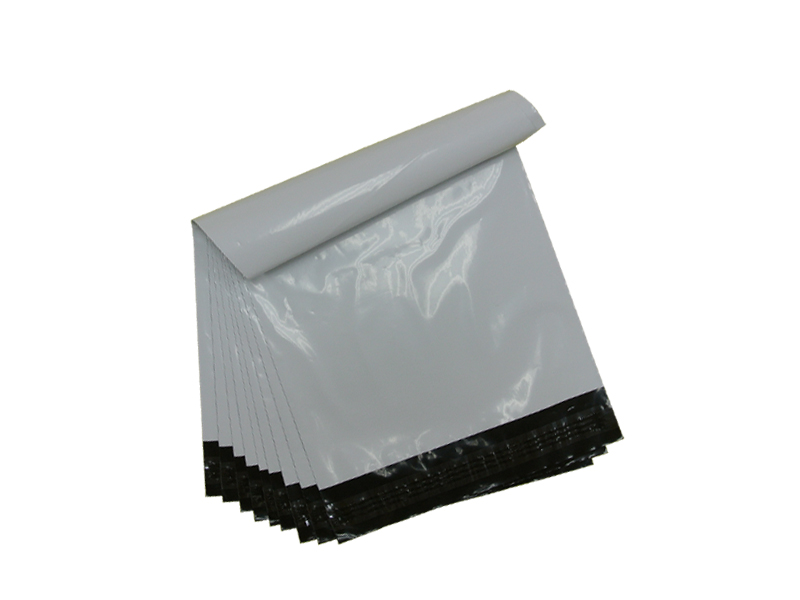
Static electricity can become a practical problem when large quantities of poly mailers are unpacked, separated, stacked, or moved through a packing line. Bags may cling together, attract dust, or become harder for workers to separate quickly. For businesses purchasing glossy white poly bag mailers bulk, static control therefore involves more than the bag itself. Storage conditions, workplace humidity, handling methods, equipment, and packing-line design can all affect how much static develops.
At WH Packing, we manufacture courier bags for e-commerce, express delivery, importers, traders, and packaging wholesalers. Our experience with bulk orders has shown that static problems are easier to manage when buyers consider both packaging material and the conditions in which bags are stored and handled.
Why Does Static Build Up on Poly Mailers?
Polyethylene is an insulating material. When two plastic surfaces touch and then separate, electrical charge can accumulate on their surfaces. Friction during movement can increase this effect. Repeated sliding, stacking, opening, and conveying therefore create conditions in which static electricity may become noticeable.
The surrounding environment also matters. Lower humidity can reduce the rate at which static charge dissipates from insulating surfaces. This is why a packing line may experience few problems during humid periods but more frequent bag clinging when indoor air becomes dry.
High-speed handling adds another factor. Mailers moving through automated or semi-automated packing areas repeatedly contact rollers, guides, worktables, and other bags. Workers may also separate hundreds or thousands of pieces during a shift. These repeated movements can increase static accumulation.
Storage Conditions Can Change Handling Behavior
Static prevention can begin before bags reach the packing station. Mailers should be stored in a clean area away from unnecessary heat and excessively dry conditions. Sudden changes in the storage environment can also affect how plastic packaging behaves during handling.
Businesses should review humidity levels when static problems appear repeatedly. Appropriate humidity control may reduce static accumulation in some facilities. The suitable level depends on the workplace, equipment, packaged goods, and local operating conditions. Humidity should not be increased without considering products that may be sensitive to moisture.
Original packaging can also help keep unused mailers clean before production. Instead of opening several cartons at once, workers can prepare quantities according to actual packing needs. This reduces unnecessary handling and limits the time that loose bags remain exposed to dust.
How Should Workers Handle Large Stacks?
Pulling bags rapidly across one another creates more friction than controlled separation. When static is already noticeable, workers can avoid repeatedly rubbing or sliding large stacks across plastic work surfaces. Smaller working batches can also be easier to separate and organize.
The packing table deserves attention as well. A work area covered with highly insulating materials may contribute to static accumulation. Facilities experiencing persistent problems can review table surfaces, floor materials, containers, and other points that frequently contact the mailers.
Grounding measures may be appropriate for certain packing environments. Conductive or static-dissipative equipment can provide a path for charge to dissipate when correctly installed. Grounding arrangements should match the equipment and workplace requirements rather than being added without technical assessment.
Equipment Can Help Control Persistent Static
Some packing operations use ionizing equipment where ordinary grounding cannot remove charge effectively from insulating plastic surfaces. Ionizers produce positive and negative ions that can neutralize surface charge. They may be positioned near areas where bags are separated, opened, transferred, or fed into equipment.
Placement matters. An ionizer located too far from the actual static source may have limited effect. Before adding equipment, operators should identify where the bags begin clinging or attracting particles. The problem may occur during carton unloading, stack separation, conveyor movement, or bag opening.
Maintenance is another practical point. Static-control devices need to remain clean and operate according to their specified requirements. Facilities should include these devices in routine equipment checks rather than treating static control as a one-time adjustment.
Bag Construction Also Deserves Attention
Our White Poly Mailers use 100% virgin polyethylene and three-layer extrusion technology. An anti-static release liner is also available as a specified option. They have a white exterior with a black or grey interior and use self-adhesive permanent glue. The bags are intended for express-delivery packaging, with an MOQ of 10,000 pieces.
When evaluating glossy white poly bag mailers bulk, buyers should separate static requirements from other packaging requirements. Film construction, opacity, sealing, size, printing, and order quantity are different considerations. A standard polyethylene mailer should not automatically be treated as an antistatic bag unless that function is specifically stated for the product.
For businesses with particular static-control requirements, discussing the actual packing process before ordering is useful. Buyers can describe their equipment, operating environment, packing speed, storage conditions, and the goods being packed. This gives the manufacturer clearer information when reviewing a packaging request.
A Practical Static-Control Routine
A useful first step is to locate the stage where static becomes noticeable. Operators can observe whether bags cling immediately after unpacking or only after passing through packing equipment. This helps distinguish a storage-related issue from friction generated during production.
Next, review environmental conditions and handling practices before changing the packaging specification. Check humidity, work surfaces, handling factor, grounding arrangements, and existing static-control equipment. Changes can then target the source of the problem instead of relying on repeated trial and error.
For large-volume projects, WH Packing combines courier-bag manufacturing with product design, order response, logistics delivery, and after-sales follow-up. Our factory has a monthly production capacity of 100 million bags, while internal quality control procedures are used to monitor production consistency. We can also discuss packaging requirements with B2B customers before production.
Keeping Bulk Mailer Handling More Consistent
Static in bulk poly mailer handling usually develops through a combination of plastic surface properties, friction, dry conditions, and repeated movement. Storage management, controlled handling, suitable grounding, workplace checks, and ionization where appropriate can reduce disruptions during packing.
The key is to identify where the charge develops before deciding on a solution. For importers, wholesalers, e-commerce businesses, and express-delivery companies, reviewing the complete handling process can make bag separation and packing more predictable while keeping packaging decisions tied to actual operating conditions.