
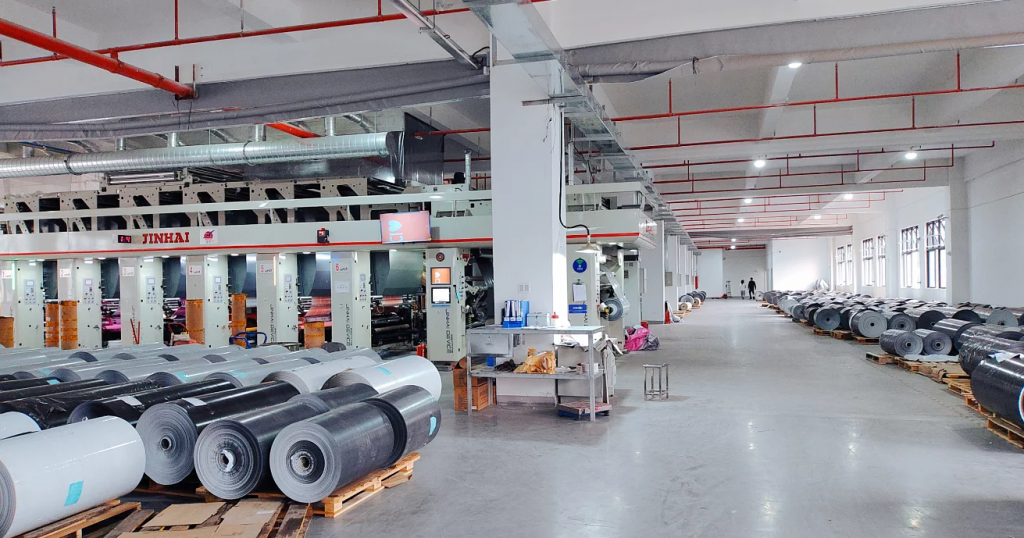
A packaging supplier can look attractive on paper, yet the real test appears in material consistency, production communication, customization control, and delivery performance. Businesses comparing a China poly mailers factory should look beyond unit prices and examine how the supplier handles specifications from artwork approval through finished-bag inspection. At WH Packing, we believe a useful supplier assessment starts with measurable production details rather than broad promises.
Examine Manufacturing Capability
Factory capability begins with the equipment used to produce the film and bags. A supplier making polyethylene mailers should have a defined process for extrusion, printing, bag making, sealing, and inspection. Understanding these stages helps buyers see whether the factory controls important parts of production internally.
Production scale matters when order volumes change from one season to another. A supplier with suitable equipment and organized production planning can handle repeat orders more systematically than a business that depends heavily on outside processing. Buyers should ask about machine capacity, normal production schedules, and how customized orders are managed.
A China poly mailers factory should also be able to explain its material specifications clearly. Questions about polyethylene type, film structure, thickness range, adhesive, printing method, and finished dimensions should receive specific answers. Clear technical communication is often more useful than a long list of marketing claims.
Check Material and Film Quality
Poly mailers depend heavily on film quality because the film forms the main protective layer around the shipment. Buyers should review the resin specification, layer structure, thickness tolerance, and intended application before comparing quotations. The same nominal size can behave differently if the material construction is different.
Three-layer extrusion is commonly used when manufacturers want to build a multilayer film structure. The production process should be consistent across batches so that customers receive packaging with comparable handling characteristics over time. Material records and incoming-resin controls can provide useful evidence of how a factory manages this consistency.
Samples are especially helpful when evaluating a new supplier. A buyer can fill the sample with an actual product, seal it, label it, and handle it in a way that resembles normal fulfillment. This provides more practical information than judging a mailer only from photographs or a specification sheet.
Evaluate Printing and Customization
Customized packaging requires more than accepting an artwork file. The supplier should explain its printing method, color capability, artwork requirements, and proofing process before production begins. These details reduce uncertainty when the design contains several colors or precise visual elements.
Gravure printing is suitable for high-volume packaging applications and can support multicolor designs. At WH Packing, we use gravure printing with the ability to print up to eight colors, allowing customers to submit customized artwork for their mailers. The process should still include artwork confirmation and a clear reference before bulk production.
Customization also extends beyond graphics. Size, thickness, adhesive type, exterior appearance, and other functional details may need to match the customer’s packing process. A reliable supplier should be able to separate decorative requirements from technical requirements and confirm both before production starts.
Review Quality Control Practices
Quality control should cover more than the final appearance of a carton. Film thickness, bag dimensions, sealing, adhesive performance, printing registration, and surface condition can all affect the usability of the finished packaging. Buyers should ask which characteristics are checked during production and which are reviewed before shipment.
Inspection frequency is another useful question. A supplier may inspect raw materials, monitor production samples, and conduct final checks before packing. The specific system will vary by factory, but the important point is that quality should be monitored throughout the manufacturing process rather than considered only at the final stage.
Documentation can make supplier management easier for repeat orders. Approved specifications, artwork files, sample references, and inspection records create a shared basis for future production. If a problem appears later, these records also help identify whether the issue came from material, artwork, production, or handling.
Compare Communication and Order Management
International sourcing involves more than manufacturing. Time-zone differences, artwork revisions, shipping schedules, and specification changes can create delays if communication is unclear. Buyers should assess whether the supplier provides structured confirmation rather than relying on informal messages alone.
A practical order process should identify key stages from quotation to production. Specifications need to be confirmed before manufacturing, while artwork changes should be documented so different versions are not confused. Clear responsibility at each stage makes the purchasing process easier to track.
The relationship with a China poly mailers factory also becomes more important during repeat purchasing. Consistent communication can help buyers reproduce an existing specification without starting the process from scratch each time. This is particularly valuable when packaging is tied to a fixed brand design or established fulfillment routine.
Assess Capacity and Long-Term Fit
Price deserves attention, but it should be viewed alongside material specifications, production capacity, customization requirements, and expected order frequency. A low quotation may have limited value if the specification changes after production begins or if the supplier cannot maintain the required schedule.
Buyers should also consider whether the factory can support future changes. Seasonal volume increases, new artwork, additional sizes, or different packaging applications may require production flexibility. Asking about these possibilities during supplier evaluation can reveal whether the factory is suited to a longer purchasing relationship.
A sound supplier assessment ends with evidence that can be checked. At WH Packing, we discuss production requirements through material, printing, customization, and manufacturing details rather than relying on general descriptions. Businesses evaluating a China poly mailers factory can use the same approach: compare measurable specifications, inspect samples, review quality practices, and assess communication before making a purchasing decision.