
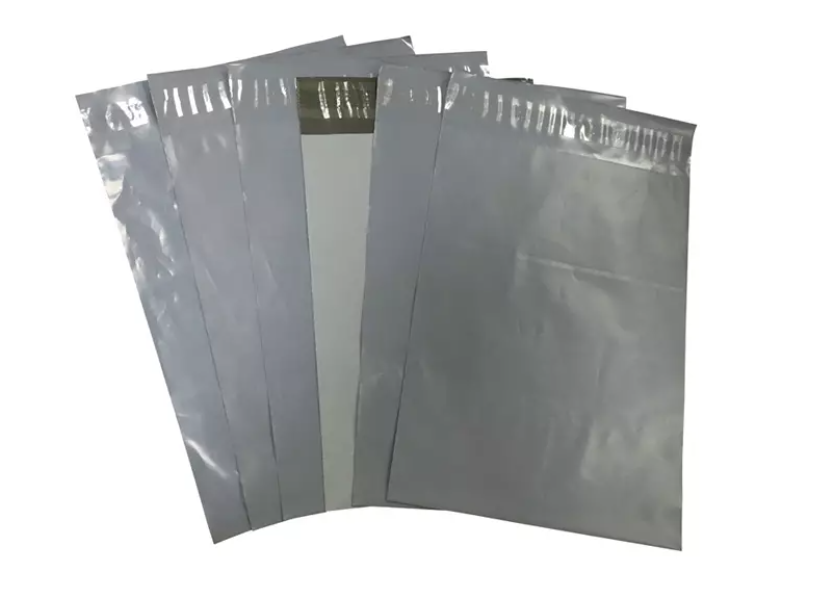
Poly mailers can be more material-efficient than boxes for soft goods, but they are not automatically eco-friendly. The real answer depends on material source, recycled content, reusability, recyclability, disposal instructions, and whether the mailer is matched to the right product.
For our B2B customers, this question matters because packaging choices affect cost, brand trust, warehouse efficiency, and sustainability claims. Therefore, brands should evaluate eco-friendly poly mailers with evidence, not vague green language.
 Are Poly Mailers Eco-friendly or Just Less Wasteful?
Poly mailers are best described as potentially less wasteful for certain shipments, not universally eco-friendly. They use lightweight flexible plastic, which can reduce excess packaging for apparel and other non-fragile products, but flexible plastic packaging remains difficult to recycle at scale.
Question | Practical B2B answer |
Are poly mailers lightweight? | Yes, they can reduce packaging volume for soft goods. |
Are poly mailers recyclable? | Sometimes, but usually through store drop-off programs, not curbside bins. |
Are recycled poly mailers more sustainable? | They can reduce reliance on virgin plastic, but claims need documentation. |
Are all eco-friendly shipping bags equal? | No, material, labeling, and end-of-life handling vary. |
 What Makes a Poly Mailer More Eco-friendly?
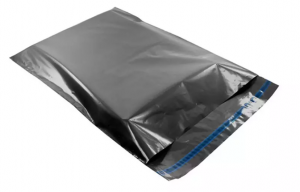
A poly mailer becomes more eco-friendly when it uses recycled material, avoids unnecessary thickness, fits the product without oversized waste, and gives customers clear disposal instructions.
For example, recycled poly mailers can reduce demand for virgin plastic resin. However, a recycled mailer still creates waste if the bag is oversized, used once, contaminated, or sent to a landfill.
As a result, B2B teams should treat sustainable poly mailers as part of a packaging system. Material choice is only one part of the decision.
How Do Recycled Poly Mailers Compare with Virgin Poly Mailers?
Recycled poly mailers compare favorably when the goal is to reduce virgin plastic use, but buyers still need to review performance, print quality, sealing strength, recycled content claims, and supplier documentation.
Comparison area | Virgin poly mailers | Recycled poly mailers |
Material source | New polyethylene resin | Recycled polyethylene content |
Common buyer concern | Consistency and appearance | Recycled claim and performance |
Sustainability role | Lightweight packaging | Lower reliance on virgin plastic |
Verification needed | Material and thickness | Recycled content and test details |
What Problems Do Recycled Poly Mailers Help Solve?
Recycled poly mailers help reduce dependence on newly produced plastic resin. This can support brands that want eco-friendly shipping bags while still needing moisture resistance and flexible packaging.
However, recycled material alone does not solve every packaging problem. The mailer still needs to protect the product, seal securely, support labeling, and fit the order size.
Therefore, procurement teams should compare recycled options against product damage risk, not only sustainability goals.
What Trade-Offs Should Buyers Review Before Ordering?
Buyers should review film thickness, opacity, print consistency, sealing strength, tear resistance, MOQ, lead time, and documentation. These details affect both warehouse performance and customer experience.
For example, custom recycled poly mailers may look strong in a sample but perform differently under high-volume packing, long-distance transit, or humid conditions. Testing sample bags with real products is a practical step before bulk orders.
This is especially important for apparel brands, marketplace sellers, subscription brands, and fulfillment centers shipping thousands of parcels every month.
 When Are Sustainable Poly Mailers a Practical Choice?
Sustainable poly mailers are practical when the product is soft, non-fragile, and suitable for flexible packaging. Apparel, textiles, fabric accessories, and lightweight non-breakable goods are common examples.
They are less suitable when products need cushioning, rigid protection, insulation, or puncture resistance. In those cases, a box, padded mailer, or hybrid packaging structure may be safer.
The best choice is the one that prevents product damage while avoiding unnecessary packaging weight.
How Can B2B Buyers Choose Custom Eco–Friendly Poly Mailers?
B2B buyers should choose custom eco–friendly poly mailers by confirming the product fit, material claim, customization needs, recycling instructions, and supplier production capability.
- Define product size and weight range.
- Select recycled, recyclable, or other material positioning.
- Confirm thickness, opacity, and sealing requirements.
- Test samples with real packing workflows.
- Review print accuracy and brand color needs.
- Request documentation for recycled-content claims.
- Prepare customer-facing disposal instructions.
What Specifications Should Procurement Teams Confirm?
Procurement teams should confirm material, thickness, bag size, adhesive type, print method, color, MOQ, lead time, carton packing, and tolerance range. These specifications determine whether the packaging works at scale.
For example, a brand ordering custom eco-friendly poly mailers for apparel should test whether the mailer size fits folded garments without excess empty space. Oversized mailers can look wasteful even when they use recycled material.
As a result, right-sizing is a sustainability action as well as a cost-control action.
How Should Brands Plan Custom Recycled Poly Mailers?
Brands should plan custom recycled poly mailers by connecting packaging design with warehouse operations. A mailer should look aligned with the brand while remaining easy for packing teams to use.
Design teams may care about logo size, color, and message placement. Operations teams may care about barcode visibility, label surface, seal speed, and bag opening.
When both teams are involved early, customized poly mailers are more likely to support the full delivery journey.
How Does WH Packing Support Eco–Friendly Poly Mailers?
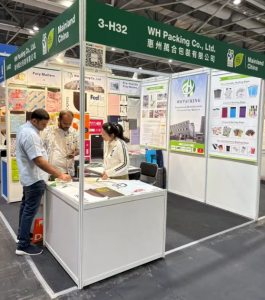
WH Packing supports eco-friendly poly mailers through recycled poly mailer options, custom printing, and B2B production capabilities for brands buying packaging at scale. Our recycled mailer pages describe options for express delivery, custom colors, logos, and thickness requirements.
- Product category: recycled poly mailers
- Material claim: 100% recycled polyethylene on product pages
- Structure: 3-layer extrusion technology
- Customization: color, size, logo, and thickness
- Printing: gravure printing up to 8 colors on recycled mailer pages
- MOQ reference: 10,000 pieces on listed product pages
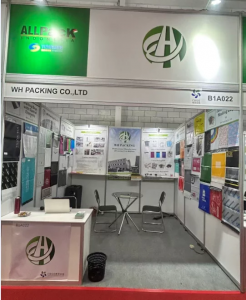
What Recycled Poly Mailer Options Does WH Packing Provide?
We provide recycled poly mailers for B2B buyers looking for eco-friendly shipping bags with custom size, color, logo, and thickness options. Its recycled poly mailer product page lists customizable thickness from 30 microns to 150 microns, or 1.2 mil to 6.0 mil, along with color and logo customization.
The page also describes self-adhesive permanent glue, water and tear resistance, and use for non-fragile shipments. These details are useful for brands comparing custom recycled poly mailers against standard virgin-material bags.
What Official Product Details Can Buyers Verify?
Buyers can verify from WH Packing’s official product information that its recycled mailers use 3-layer extrusion technology and are positioned for express delivery. A listed recycled mailer page also references MOQ of 10,000 pieces and customized thickness options.
Our product range also includes white plain poly mailers and colored plain poly mailers, both listed with 3-layer extrusion technology and an MOQ of 10,000 pieces.
However, buyers should still request recycled-content certificates, post-consumer or post-industrial recycled ratio, test reports, and final sample approval before mass production.
Conclusion: Are Eco–Friendly Shipping Bags the Right Choice for Your Business?
Eco-friendly shipping bags can be the right choice when they match the product, reduce unnecessary packaging, use verified material claims, and provide realistic disposal instructions.
Recycled poly mailers can help reduce reliance on virgin plastic, while recyclable options may support store drop-off programs where local facilities accept clean polyethylene film. However, brands should not imply that every customer can recycle every mailer through curbside systems.
For B2B buyers, the most reliable approach is practical and evidence-based: choose the right mailer size, test real shipments, confirm supplier claims, and write clear recycling guidance. WH Packing offers a relevant product direction for brands sourcing eco-friendly poly mailers, especially when buyers need custom eco-friendly poly mailers with defined size, logo, thickness, and bulk order requirements.