
As apparel order volumes increase, warehouses often look for ways to reduce repetitive packing work. Automated bagging can handle several steps that were previously completed by hand. However, not every shipping bag works smoothly with every machine. For brands considering clothing brand shipping bags, compatibility depends on bag dimensions, material behavior, sealing structure, printing, and the specifications of the packing equipment.
At WH Packing, we manufacture courier bags for e-commerce and express delivery applications. Our experience with customized packaging allows us to consider how bag specifications relate to different packing processes. For clothing sellers planning automation, the practical question is therefore not simply whether poly mailers can be automated. The bag and the equipment need to be evaluated together before a large production order is confirmed.
How Automated Packing Systems Handle Clothing Orders
An automated packing line may include product feeding, bag opening, item insertion, sealing, labeling, and sorting. The exact configuration varies between warehouses. Some systems automate only part of this process, while others connect several packing stages.
Clothing is generally lightweight and flexible, but different products behave differently during packing. A folded T-shirt has a relatively regular shape. A padded jacket is bulkier and may expand after folding. Jeans can be heavier and thicker. These differences affect the size of the shipping bag and the way the item enters it.
For this reason, compatibility should be assessed according to the actual SKU range. A bag that works well for thin garments may not have enough usable space for thicker products. Testing representative items helps determine whether the selected packaging can move through the system without frequent manual adjustment.
Bag Dimensions Need to Match the Packing Process
Bag width and length are basic considerations for automated handling. If a mailer is too narrow, insertion can become difficult. An oversized bag may use unnecessary material and can also affect how the package moves through later stages.
The actual opening also matters. Automated equipment needs enough space to insert the folded garment without catching the edge of the bag. Buyers should therefore provide more than the nominal bag dimensions when discussing a customized project. Product dimensions after folding and expected package thickness are also useful.
For businesses handling several clothing categories, one bag size may not suit every SKU. Grouping products by folded dimensions can help determine how many mailer sizes are practical. This approach can balance packaging standardization with the physical requirements of different garments.
Material Behavior Affects Machine Handling
Polyethylene mailers are flexible, which makes them useful for shipping apparel and other non-fragile products. In automated environments, however, the film must also behave consistently while it is being fed, opened, filled, and sealed.
Film thickness, stiffness, surface characteristics, and bag construction can influence handling. Very different material specifications may behave differently on the same equipment. These factors should be discussed with both the packaging manufacturer and automation provider rather than selected according to appearance alone.
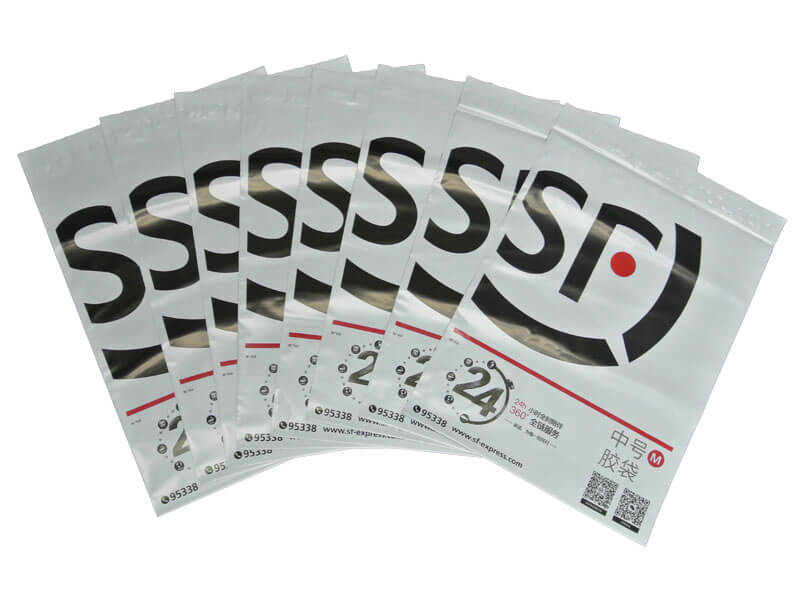
Our custom poly mailers with Logo are made from 100% virgin polyethylene and use three-layer extrusion technology. They feature self-adhesive permanent glue and support gravure printing in up to eight colors. The bags are intended for express delivery, with an MOQ of 10,000 pieces. Actual machine compatibility should still be verified against the customer’s packing equipment and operating settings.
Sealing Design Is Part of Automation Compatibility
The closure method is another important detail. In manual packing, workers can adjust the bag position before removing a release liner or closing a flap. Automated equipment follows a defined mechanical sequence, so the sealing area needs to suit that sequence.
Self-adhesive closures can be practical for courier packaging, but buyers should check how their specific system handles the flap and adhesive section. The location of the adhesive strip, flap dimensions, and required sealing movement can affect whether the process can be automated.
It is also useful to distinguish between equipment that handles pre-made mailers and systems that create bags from film during operation. These are different packing methods. Buyers should identify their machine type before requesting packaging samples or finalizing specifications.
Printing Should Not Interfere With Operational Areas
Packaging for fashion e-commerce often carries logos, brand colors, handling information, or other graphics. Automation does not remove these branding requirements, but artwork should be planned around functional areas of the package.
For example, shipping labels, barcodes, or machine-readable information may need clear placement areas. Decorative graphics should not make these operational elements difficult to identify. The exact requirements depend on the labeling and scanning equipment used in the warehouse.
When developing clothing brand shipping bags, buyers can mark the areas reserved for labels and other logistics information during the artwork stage. This defines the functional areas in advance and reduces the need to change packaging graphics after the packing workflow has already been established.
Testing Before Bulk Production Reduces Compatibility Problems
A sample test is useful before moving from manual packing to an automated line. It allows the warehouse team to observe how the bag feeds into the machine, opens, receives the garment, closes, and moves to the next stage.
Testing should use real products rather than empty bags alone. Several garment types can be included, especially if the warehouse handles different weights and folded sizes. Operators can also check whether package orientation remains consistent during normal production conditions.
The results can then be used to adjust bag dimensions, construction, or other customization details where necessary. This is particularly relevant for importers, packaging wholesalers, apparel e-commerce businesses, and other B2B buyers purchasing mailers in volume.
What Buyers Should Confirm Before Ordering
Before placing a production order, buyers should collect information from the packing-system provider. Useful details include acceptable bag dimensions, compatible material types, required opening orientation, sealing method, label position, and restrictions related to film handling.
Packaging requirements should then be compared with the actual clothing range. Folded garment dimensions, typical order quantities per parcel, package thickness, and SKU variation can influence the final specification. A warehouse packing single T-shirts has different requirements from one shipping mixed apparel orders.
Our own factory has a monthly production capacity of 100 million bags. We also maintain quality management and internal quality-control processes. For customized orders, our service covers pre-sales consultation, product design, order response, logistics delivery, and after-sales follow-up.
Making Poly Mailers Work With Packing Automation
Clothing shipping bags can be compatible with automated packing systems, but compatibility is not automatic. The result depends on the relationship between the mailer specification, garment dimensions, sealing method, and the particular machine used in the warehouse.
A practical approach is to define the packing process first, select suitable bag specifications, and then run samples with representative garments. This gives clothing businesses clearer information before bulk production and helps packaging decisions fit the actual workflow rather than relying only on standard bag sizes or visual design.